
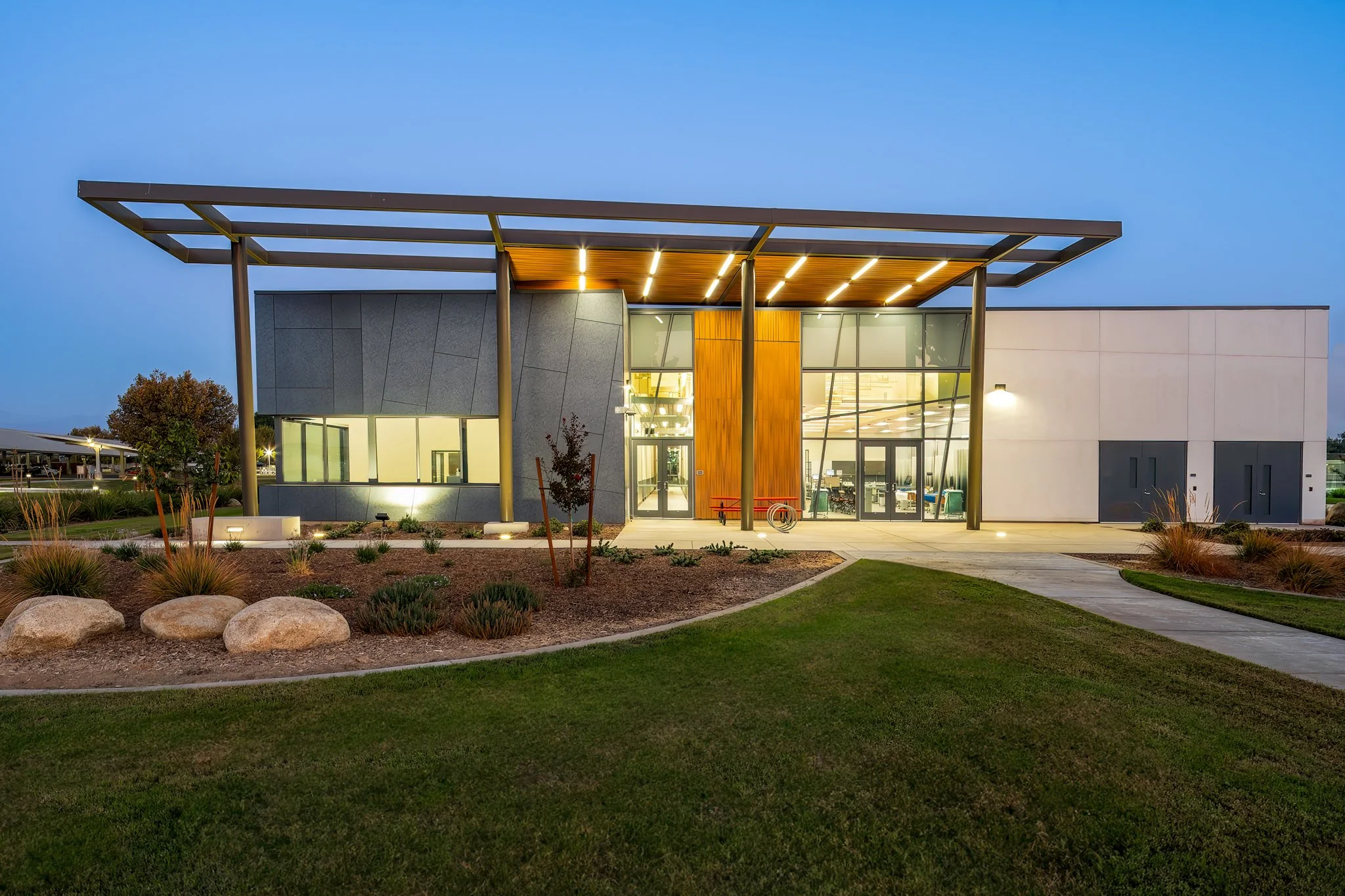
What Makes Great Architectural Photography
Every so often a builder or an agent calls me and says some version of the same thing: "Can't I just have my nephew shoot it on his phone?" And sure, technically, yes. But there's a reason architectural photography is its own discipline and not just "real estate photos, but nicer." It's worth walking through what actually separates a photo that sells a project from one that just documents it.
It's about light, not just the building
The single biggest difference between a snapshot and architectural photography is timing. A house doesn't look the same at 11am as it does an hour before sunset, and if you've ever wondered why professional shots of a home always seem to glow a little, that's not an accident. It's planning. I'll often scout a property ahead of a shoot just to figure out which direction it faces, when the shadows from the neighbor's oak tree are going to cut across the front elevation, and whether the interior gets that late-afternoon light through the west-facing windows that makes a living room look like something out of a magazine.
For a lot of Central Valley properties, especially the ones with big overhangs or covered patios designed for our summers, that timing matters even more. A shot taken at noon can make a beautifully designed shade structure look like a slab of shadow instead of the feature it's supposed to be.
Composition is an argument, not a snapshot
When I walk into a space for the first time, I'm not looking for "a nice angle." I'm trying to figure out what the architect or the designer was actually trying to say with the room. Sometimes that's a sightline that pulls your eye straight through to a window wall. Sometimes it's a ceiling detail that only reads if you shoot low and wide. A good architectural photo makes an argument about why the design decision was worth making. It doesn't just prove the room exists.
This is where a lot of DIY photos fall short. They're technically in focus and well-lit, but they don't have a point of view. They show you a kitchen. They don't show you why that kitchen works.
The technical stuff nobody sees, but everybody feels
There's a chunk of architectural photography that's invisible if it's done well and painfully obvious if it's not, namely keeping vertical lines actually vertical. Shoot a two-story home from ground level without correcting for it and you get that slightly warped, leaning-tower effect that makes everything look cheap, even if the home isn't. Getting that right (either in-camera with the right lens and positioning, or in post) is one of those things that separates professional work from a phone photo, even to people who couldn't tell you why.
The other piece is exposure blending. Interiors almost always have a huge range between the bright window light outside and the dimmer room itself. A single exposure either blows out the windows to white or leaves the room looking dark and flat. Blending multiple exposures, done carefully and not overcooked, is how you get a photo that looks like what your eye actually saw standing in the room.
Why this actually matters for your bottom line
None of this is about vanity. For architects and builders in Fresno, Clovis, and Visalia, your portfolio is often the first impression a potential client gets, long before they ever walk a job site. Weak photography makes strong work look average. I've seen genuinely beautiful custom homes get scrolled past because the photos didn't do them justice, and I've seen more modest projects get real traction because the photography made the design intent obvious at a glance.
If you're putting together a submission package, pitching a new client, or just trying to keep a current portfolio that reflects the level you're actually building at, it's worth treating photography as part of the project budget, not an afterthought once the punch list is done.
I shoot architectural and luxury real estate photography throughout the Central Valley, based out of Clovis. If you've got a project coming up, whether it's a custom home, a commercial space, or something further out toward the foothills, I'd love to talk through it. [Get in touch] or take a look at [recent work].